
U.S. Patent Prosecution Support for Foreign Associates
Strategic U.S. patent prosecution for foreign applicants, law firms, and in-house IP teams
Divergent works with patent attorneys and law firms outside the United States to provide focused, senior-led representation before the USPTO. We establish clear responsibility, communication protocols, deadlines, and fees while respecting the referring firm’s relationship with the client.
A Reliable U.S. Extension
of Your Team
Cross-border patent prosecution requires coordination among the client, originating counsel, U.S. counsel, inventors, translators, and other service providers. Divergent works with referring counsel to establish a practical operating framework for each engagement, including who may provide instructions, how communications will be handled, and how responsibility for deadlines, filings, fees, and reporting will be allocated.
What Foreign Associates Can Expect
Designated U.S. Counsel
A primary relationship attorney is responsible for substantive coordination, with backup coverage identified for continuity.
Clear Scope and Responsibility
We confirm the accepted matters, deadlines, authorized contacts, responsible attorneys, and engagement scope before work begins.
Client-Directed Communications
Communications may flow through referring counsel, directly through designated client contacts, or through an agreed combination of both.
Transparent Fees
Professional fees, anticipated expenses, and approval requirements are identified before substantive work begins whenever practicable.
How a Referred Matter Begins
01
Preliminary Inquiry
General, nonconfidential information about the prospective client, matter, and known deadlines.
02
Conflicts Review
Review of the client, related entities, counterparties, and other relevant parties.
03
Scope Discussion
Confirmation of services, deadlines, communication structure, attorneys, and anticipated fees.
04
Written Engagement
Execution of the engagement agreement and confirmation of accepted matters and responsibilities.
05
Substantive Work and Reporting
Performance of the U.S. work through the agreed communication and reporting channels.
Please do not provide confidential technical information or substantive legal instructions until conflicts clearance and engagement arrangements have been confirmed.
Coordinating U.S. Strategy With Originating Counsel
A U.S. patent application should support the client’s broader international portfolio while accounting for the distinct requirements and strategic opportunities of U.S. practice. We work with originating counsel to identify issues that may require a different approach in the United States, explain the available options and tradeoffs, and coordinate prosecution decisions so that the U.S. strategy remains aligned with related applications and the client’s commercial objectives.
U.S. Filing
Strategy
✓ National-stage entry
✓ Priority-application differences
✓ Written-description and claim support
✓ Information Disclosure Statement obligations
Claim &
Prosecution Strategy
✓ Patent eligibility considerations
✓ Functional claiming
✓ Restriction and divisional practice
✓ Continuation strategy
✓ Examiner interviews
International Portfolio Coordination
✓ Consistency across related families
✓ Effects of amendments on claim scope
✓ Preservation of continuation opportunities
✓ Alignment with commercial objectives
Recommendations Designed for Meaningful Review
Substantive drafts are accompanied by a practical explanation of the proposed approach, significant alternatives, and any material effect on claim scope, prosecution history, related applications, cost, or timing. When a decision is required, we identify the issue, our recommendation, the principal alternatives, and the applicable decision date.
For standard Office Action responses, Divergent generally targets delivery of a draft within two weeks after receiving the USPTO communication and the information reasonably required to prepare the response.
Billing and Administrative Coordination
Cross-border patent work often involves client-specific billing, reporting, and vendor requirements in addition to substantive legal work. We coordinate these administrative expectations at the outset so that invoices, approvals, expenses, and reporting remain clear throughout the engagement.
Financial Arrangements
-
Predetermined or alternative fees
-
Budgets and approval thresholds
-
Billing currency
-
Accruals and forecasts
-
USPTO and vendor expenses
Administrative Requirements
-
Matter codes
-
Invoice formats
-
Vendor registration
-
Tax documentation
-
Client reporting requirements
-
Technology and data-handling requirements
Your Client Relationship
Remains Central
Divergent recognizes that foreign associates may have advised their clients for many years and may coordinate the broader international portfolio. We do not presume that communications should bypass referring counsel. The client’s instructions and the written engagement determine who provides instructions, receives drafts and USPTO correspondence, approves expenses, and participates in substantive discussions.
✓ No presumed bypass of referring counsel
✓ Communication protocols confirmed in writing
✓ Clear allocation of U.S. and non-U.S. legal responsibilities
Relevant Team
The professionals below advise foreign applicants and associates on U.S. national-stage entry, USPTO prosecution, appeals, and cross-border portfolio coordination.

Gregory B. Gulliver
Partner · Registered Patent Attorney · Former Software Engineer
A former software engineer with nine years of industry experience, Gregory has prepared and prosecuted hundreds of applications involving wireless communications, software, computer hardware, semiconductors, and network technologies.
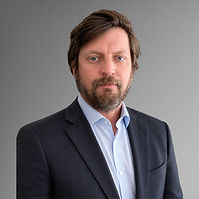
Brandon R. Theiss
Partner · Registered Patent Attorney · Licensed Professional Engineer
A licensed professional engineer and former industrial-control and medical-device engineer, Brandon advises on patent prosecution, § 101 strategy, portfolio development, and post-grant proceedings involving AI, software, cloud systems, medical devices, and automation.

Michael K. Kelly
Partner · Registered Patent Attorney · Electrical & Industrial Engineering
An electrical and industrial engineer with more than 30 years of experience, Michael has prosecuted hundreds of applications and coordinated patent protection across Europe and Asia for semiconductors, aerospace systems, medical devices, software, and cloud technologies.

Robert Hyun Chang
Of Counsel · Registered Patent Attorney · Materials Engineer
A registered patent attorney with more than 25 years of intellectual-property experience and degrees in metallurgical and materials science engineering and physics, Robert helps technology companies draft and prosecute U.S. patent applications, build and monetize portfolios, and develop claim and licensing strategies grounded in complex technology and commercial objectives.

Danielle Gross, Ph.D.
Registered Patent Agent · Ph.D. in Biochemistry · Life Sciences & Medical Devices
A registered patent agent with more than a decade of prosecution experience and a Ph.D. in Biochemistry, Danielle helps life-sciences and technology companies draft and prosecute U.S. patent applications, build portfolios, and develop claim strategies grounded in complex science.

Get In Touch
Whether you are developing a new patent portfolio, transferring existing prosecution work, preparing for a product launch, or responding to a challenge against an issued patent, we would welcome the opportunity to discuss your objectives.
Please do not include confidential information in an initial inquiry. An attorney-client relationship is formed only through a written engagement agreement.