
Enterprise Patent Operations
Operationally Disciplined Patent Prosecution for In-House and Legal Operations Teams
Divergent helps in-house legal and patent teams manage U.S. patent portfolios with disciplined prosecution, predictable workflows, and direct attorney access. Whether supporting a single technology area, supplementing an existing outside-counsel panel, or transitioning an established portfolio, we integrate with our clients' existing processes to deliver commercially focused patent prosecution without unnecessary operational complexity.
Patent Counsel Should Function as an Operating Partner
Managing an enterprise patent portfolio requires more than sound legal analysis. Outside counsel must understand how the client's legal department operates, how decisions are made, and how patent prosecution fits within broader business, budgeting, and product-development objectives. Effective recommendations are those that arrive at the right time, focus attention on the decisions that matter, and align with established prosecution guidelines and operational processes.
Effective enterprise patent counsel understands:
Invention intake and disclosure workflows
Approval authority and decision-making processes
Technology and product priorities
Portfolio budgets, forecasts, and accruals
Escalation procedures and reporting expectations
Prosecution consistency across related applications
Billing, security, and operational requirements
The information in-house teams need to make timely decisions
We establish these expectations at the outset of every engagement and refine them as the portfolio, business priorities, and legal operations evolve.
An Operating Model Defined With the Client
No two in-house departments manage patent work in exactly the same way. At the start of an engagement, we work with the client to define a practical operating framework for the matters within our responsibility.
▶
Roles and Decision Authority
We identify the principal in-house contacts, responsible outside attorneys, approval requirements, escalation paths, and the decisions that may be made under standing instructions.
▶
Prosecution Guidelines and Playbooks
We work within client-specific outside-counsel guidelines and can help translate business preferences into matter-level prosecution protocols. These may address claim strategy, interview practice, amendment authority, continuation recommendations, prior-art reporting, inventor involvement, and budget approvals.
▶
Communication and Review Cadence
We agree on who receives substantive work, how recommendations should be presented, how much review time should be provided, and which developments require immediate communication rather than routine reporting.
▶
Reporting and Billing Requirements
We align matter descriptions, status reporting, budgets, invoice narratives, and other administrative requirements with the client's agreed processes and supported systems.
▶
Technology and Commercial Priorities
We seek to understand how the assigned matters relate to products, business units, competitors, licensing objectives, and portfolio priorities so that prosecution decisions are not made in isolation.
Matter Intake &
Invention Development
Strong patent applications begin with a disciplined intake process. We work with clients to gather the technical, commercial, and strategic information needed to prepare effective applications while aligning drafting efforts with product-development timelines, portfolio priorities, and business objectives.
▶
Invention Disclosure Review
We review invention disclosures to identify the principal inventive concepts, assess whether the technical description is sufficiently complete, flag missing information, and determine what additional inventor or business input is needed before drafting begins.
▶
Technical & Commercial Assessment
Patent strategy depends on more than technical novelty. We identify the inventive concepts, understand the commercial objectives, evaluate alternative embodiments, and consider how the invention fits within the client's products, competitive landscape, and broader portfolio strategy.
▶
Inventor & Engineering Collaboration
When appropriate, we conduct interviews with inventors, engineers, and product leaders to clarify technical details, resolve open questions, and capture implementation alternatives that may not appear in the initial disclosure. These discussions often strengthen both the specification and the long-term flexibility of the application.
▶
Portfolio & Filing Coordination
We coordinate new matters with related applications, existing patent families, publication plans, product launches, and other business milestones. This helps avoid unnecessary overlap while preserving opportunities for future continuation or divisional filings.
▶
Drafting Scope & Budget Planning
Before drafting begins, we establish the expected scope of the application, discuss anticipated claim strategy, identify any remaining open issues, and provide an advance estimate of the professional fee. Defining expectations early helps create a predictable process for both the legal team and the inventors.
The objective is to begin drafting with a clear understanding of the invention, the client's commercial goals, and the strategic decisions that will shape the resulting patent portfolio.
Prosecution Delivery &
Deadline Workflows
Patent prosecution produces a continuing stream of Office communications, response deadlines, interview opportunities, prior-art disclosures, allowance decisions, and continuation questions. Our delivery model is designed to move those matters forward while preserving meaningful review time for the client.
▶
Early Issue Identification
When a USPTO communication is received, we identify the principal issues, material decision points, information needed from the client, and any circumstances that may affect the ordinary response schedule or budget.
▶
Clear Recommendations
Substantive work is accompanied by a practical recommendation explaining the proposed approach, important alternatives, and any material effect on claim scope, prosecution history, cost, timing, or related applications.
▶
Meaningful Client Review
We provide drafts sufficiently in advance of the applicable deadline for meaningful review. For standard Office Action responses, we target delivery of a draft within two weeks after receiving the USPTO communication and the information needed to prepare the response.
▶
Examiner Interviews
Where useful, we recommend and conduct examiner interviews to test proposed amendments, clarify the issues, and improve the quality of the written response. We report the material outcome and any resulting change in strategy.
▶
Deadline and Filing Coordination
We coordinate substantive work, client approvals, and filing instructions through the docketing and deadline procedures applicable to the engagement. Responsibilities for U.S. filings, foreign filings, maintenance fees, annuities, and third-party services are confirmed rather than assumed.
These workflows are intended to make patent prosecution a predictable business process rather than a series of isolated legal tasks, giving clients greater visibility into deadlines, decisions, and the overall progress of their portfolio.
From Authorized Instructions to a Confirmed Filing Record
We treat every patent filing as an end-to-end transaction. The process begins with complete, authorized filing instructions and concludes only after the filing has been submitted, verified, and documented in accordance with the procedures established for the engagement.
▶
Authorized Filing Instructions
Before filing, we confirm the documents, filing instructions, and scope of authorization received from the client to ensure that submissions accurately reflect the approved strategy.
▶
Filing Readiness Review
We verify that required signatures, declarations, assignments, priority information, and supporting materials are complete and identify any statutory, extendable, or internal deadlines that govern the filing.
▶
Electronic Filing & Submission Verification
Following submission, we review the electronic filing package, government fee calculations, and official filing acknowledgment or receipt to confirm that the application was accepted as intended.
▶
Record Accuracy
We compare key bibliographic information—including application data, inventorship, priority claims, and filing details—against the authorized instructions to identify and resolve any discrepancies promptly.
▶
Reporting & Docket Coordination
After filing, we report the completed action, communicate resulting deadlines, and coordinate docket updates in accordance with the engagement protocol, including reconciliation with client or third-party records where applicable.
▶
Responsibility & Escalation
The engagement defines which records and deadlines AddyHart maintains and how those responsibilities interact with the client's docketing systems and other service providers. Questions regarding responsibility, missing information, or inconsistencies are identified and escalated rather than assumed.
Portfolio Transitions
Changing prosecution counsel can create operational risk if responsibility, records, and deadlines are not transferred systematically. We support transitions involving individual matters, defined technology areas, or broader U.S. portfolios.
▶
Scope & Responsibility Mapping
We identify the matters, jurisdictions, technologies, and services included in the transition so that responsibility for each aspect of the portfolio is clearly defined from the outset.
▶
File & Data Collection
We coordinate the transfer of prosecution histories, correspondence, docket information, filing instructions, and other available portfolio records from prior counsel or service providers.
▶
Deadline Reconciliation
Transferred records are compared against available official records to identify upcoming deadlines, confirm responsibility for near-term actions, and reduce the risk of missed obligations.
▶
Authorization Changes
Where appropriate, we prepare powers of attorney, correspondence address updates, and other filings necessary to establish representation before the USPTO.
▶
Matter Review & Prioritization
We identify urgent deadlines, pending allowances, continuation opportunities, dormant applications, and matters requiring immediate strategic review following the transition.
▶
Client Workflow Integration
We implement the client's preferred naming conventions, reporting practices, budgeting expectations, billing requirements, and prosecution protocols so the portfolio operates consistently after the transition.
▶
Transition Reporting
Throughout the transition, we communicate unresolved issues, data gaps, and decisions requiring client direction so that outstanding matters are identified and addressed promptly.
The precise scope of any transition is established in the engagement and coordinated with the client, prior counsel, foreign associates, docketing providers, and other vendors as appropriate. Transition timing depends on conflicts clearance, the agreed scope, and timely receipt of complete and usable information from the client and outgoing counsel. Responsibility for a matter or deadline begins only as established in the written engagement and transition instructions.
Portfolio Management & Reporting
Effective portfolio management requires more than completing prosecution tasks. We work with clients to provide the financial visibility, reporting, and strategic consistency needed to manage patent portfolios as long-term business assets.
Budgeting & Fee Visibility
We establish the expected scope of work before substantive prosecution begins and provide predictable professional fees for many standard U.S. prosecution services. Where work falls outside the agreed scope, we identify the additional effort and obtain client direction whenever practicable.
Financial Planning & Accruals
Engagement-specific operating procedures may include matter or portfolio budgets, approval thresholds, accrual reporting, forecasts, alternative fee arrangements, treatment of USPTO and third-party expenses, and client-specific billing requirements.
Portfolio Reporting
Reporting is tailored to support business decisions rather than simply generating status updates. Depending on the engagement, reports may address prosecution status, upcoming deadlines, continuation opportunities, budget forecasts, claim developments, and matters requiring strategic attention.
Portfolio Consistency
We strive for consistent terminology, coordinated prosecution strategies, and thoughtful claim development across related matters while recognizing that individual applications may require different approaches. Significant prosecution decisions are evaluated within the broader context of the portfolio rather than in isolation.
Global Portfolio Coordination
Many enterprise portfolios involve multiple law firms, foreign associates, service providers, and internal stakeholders. We help establish clear operational responsibilities so work proceeds efficiently across organizations.
Foreign Associate Coordination
We coordinate U.S. prosecution strategy with foreign associates selected or approved by the client while local counsel remains responsible for local law advice and representation.
Vendor & Service Management
Engagement procedures may define responsibility for translations, drawings, searches, annuities, filing providers, and other third-party services, together with approval procedures for associated costs.
Client Requirements & Data Handling
We follow agreed confidentiality, communication, security, file-transfer, retention, and outside-counsel requirements established during engagement planning. Specialized operational requirements are documented rather than assumed.
Staffing & Engagement Models
Enterprise patent needs change over time. We structure engagements to provide direct attorney accountability while scaling resources to match portfolio size, technology, and workload.
Direct Accountability
Each matter is led by an experienced attorney responsible for understanding the assigned technology, client objectives, and prosecution strategy. Review responsibilities and escalation paths are clearly defined.
Flexible Engagement Structures
Depending on client needs, AddyHart may serve as lead U.S. prosecution counsel, technology-area counsel, supplemental panel counsel, overflow counsel, transition counsel, or counsel for specialized prosecution matters such as appeals, eligibility issues, or difficult Office Actions.
Scalable Support
Clients may begin with a limited group of matters and expand the engagement over time as operational needs evolve, while maintaining continuity of service and a consistent relationship team.
Transparent Pricing
We believe clients should understand the expected cost of patent prosecution before work begins. Many of our most common services are offered at predetermined professional fees, allowing clients to budget with confidence and avoid unexpected billing.
Standard Office Action Turnaround
No Additional Rush Fee
We target delivery of draft Office Action responses within two weeks after receiving the USPTO communication and the information needed to prepare the response.
Any applicable USPTO extension-of-time fees remain the client’s responsibility.
Read Insights
Application-drafting fees are established in advance based on the technology, complexity, number of embodiments, and anticipated scope of the application.
We target delivery of draft Office Action responses within two weeks after receiving the USPTO communication and the information needed to prepare the response. Routine administrative work—such as issue-fee processing, preparation of standard Information Disclosure Statements, and filing an instructed Request for Continued Examination—is not used as a separate source of professional fees.
Listed amounts are AddyHart professional fees for standard matters within the described scope. USPTO fees, drawings, searches, translations, experts, vendors, appeals, petitions, declarations, litigation, and extraordinary matters are excluded unless expressly stated. All representations are subject to conflicts clearance and a written engagement agreement
Why AddyHart for
Enterprise Patent Operations
Direct Access to Experienced Counsel
Experienced attorneys remain directly involved in invention development, claim strategy, examiner interviews, and significant prosecution decisions throughout the engagement.
Operational Discipline
Defined workflows, predictable pricing, clear recommendations, and structured communication help clients manage prosecution as a repeatable business process rather than a series of isolated legal matters.
Experience Beyond Prosecution
Our prosecution strategy is informed by experience with appeals, PTAB proceedings, litigation support, licensing, and patent monetization, providing additional perspective when making claim and prosecution decisions.
Built for Enterprise Teams
We work within client guidelines, reporting practices, approval structures, and supported systems while maintaining clear accountability and direct attorney access.
Related Divergent Blog Articles


Relevant Team
The professionals below bring experience managing substantial prosecution portfolios, implementing client-specific procedures, and coordinating transitions, reporting, docketing, and deadline control.

Robert P. Hart
President & Co-Founder · Registered Patent Attorney · Chemical & Petroleum Engineering
A chemical and petroleum engineer with more than 30 years of private-practice and in-house experience, Robert integrates patent prosecution and portfolio development with licensing, commercialization, transactions, and corporate strategy.

Brandon R. Theiss
Partner · Registered Patent Attorney · Licensed Professional Engineer
A licensed professional engineer and former industrial-control and medical-device engineer, Brandon advises on patent prosecution, § 101 strategy, portfolio development, and post-grant proceedings involving AI, software, cloud systems, medical devices, and automation.

Tom J. Filarski
Senior Counsel · Registered Patent Attorney · Chemist & Chemical Engineer
A chemist and chemical engineer with four decades of experience, Tom develops and coordinates patent strategies for medical devices, pharmaceuticals, chemicals, polymers, semiconductors, energy technologies, and manufacturing systems.
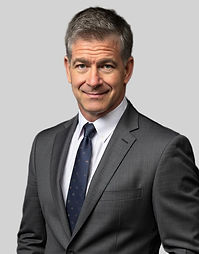
Scott D. Paul
Partner · Registered Patent Attorney · Materials & Mechanical Engineering
A materials and mechanical engineer, Scott has prosecuted more than 2,000 U.S. applications, drafted more than 600 applications, and filed more than 1,000 PTAB appeal briefs involving AI, semiconductors, cloud systems, medical devices, and advanced manufacturing.


Get In Touch
Whether you are developing a new patent portfolio, transferring existing prosecution work, preparing for a product launch, or responding to a challenge against an issued patent, we would welcome the opportunity to discuss your objectives.
Please do not include confidential information in an initial inquiry. An attorney-client relationship is formed only through a written engagement agreement.