
Ex Parte Reexamination
Patent owner defense and focused third-party challenges
Ex parte reexamination puts issued claims, litigation positions, and portfolio value under scrutiny. Plan the prior-art analysis and technical record around the business interests at stake.
Divergent represents patent owners and third-party requesters through assessment, request preparation, examination, and any available PTAB or Federal Circuit review. Our work combines prosecution, technical evidence, litigation coordination, and appellate experience.
Representation for Patent Owners
Start with the claims and the business positions they support. We assess the request early and plan the response, evidence, and litigation coordination around the proceeding’s stage.
Start With the Request and the Record
We assess:
✓ Each asserted substantial new question of patentability
✓ The cited patents and printed publications
✓ The requester’s claim mappings and technical assumptions
✓ The original prosecution history
✓ Related litigation and licensing activity
✓ The importance of each challenged claim
✓ Related patents and pending applications
The assessment identifies the procedural stage, service and filing requirements, available response routes, and the evidence needed for examination or appeal.
Before an Order: Focus the Response
Before reexamination is ordered, we assess whether an eligible pre-order paper can expose a claim-mapping error or a mischaracterization of what the cited reference teaches. We focus the submission on the substantial-new-question inquiry and the permitted scope of that procedure.
A request for discretionary relief under § 325(d) has separate grounds and filing requirements. We assess the appropriate petition route and supporting record according to the proceeding’s stage.
After an Order: Statements & Office Action Responses
After an order, we weigh the benefit of an optional patent owner statement against the requester’s opportunity to reply and the record it creates in related litigation. If the statement is waived, merits preparation continues.
The first Office Action response brings the defense into focus: address each rejection, separately defend valuable dependent claims, and submit appropriate supporting evidence while preserving issues for appeal.
Our work may include:
✓ Patent owner statements
✓ Responses to non-final and final Office Actions
✓ Examiner interviews
✓ Technical distinctions
✓ Expert declarations and supporting evidence
✓ Objective evidence of nonobviousness
✓ Claim amendments
✓ Petitions and procedural submissions
✓ Preservation of issues for appeal
Develop the Technical Evidence
A focused expert declaration can address disputed reference teachings, system operation, or the factual basis for combining prior art.
We work with qualified experts to develop reasoned testimony grounded in the technology, literature, testing, and the skilled artisan’s understanding. We assess evidentiary needs early and coordinate declarations with the response and related litigation.
Amendments & Enforceable Scope
Before recommending a claim amendment or narrowing argument, we evaluate its effect on infringement coverage, past damages, intervening rights, licensing, and related patents. Existing dependent claims may offer a useful defense without changing issued language.
Before recommending an amendment, we consider:
✓ Existing and anticipated infringement positions
✓ Potential intervening-rights issues
✓ Pending litigation
✓ Continuation and reissue options
✓ Related patents and applications
✓ Commercially important product coverage
PTAB & Federal Circuit Appeals
A patent owner may appeal a final rejection in ex parte reexamination to the PTAB. A dissatisfied patent owner may subsequently seek review at the Federal Circuit; third-party requesters do not possess the same appeal rights.
We build the record before the examiner with claim-specific arguments, supporting evidence, and preserved issues for the available appeal path.
Services for Third-Party Requesters
We develop requests grounded in patents and printed publications, with precise claim mappings, supported combinations, and clearly identified substantial new questions. The prosecution history and related disputes inform the analysis.
Requester participation becomes limited as the proceeding advances, making the initial record important. Filing a request seeks further examination; it does not establish unpatentability.
We assist requesters with:
✓ Evaluating reexamination against IPR or litigation alternatives
✓ Reviewing the patent and prosecution history
✓ Evaluating patents and printed publications
✓ Identifying proposed substantial new questions
✓ Preparing detailed claim mappings
✓ Developing supporting technical evidence
✓ Drafting and filing the request
✓ Preparing any permitted early-stage reply
We also assess the request’s effect on litigation, settlement, public statements, and business objectives, including consistency with positions taken in other forums.
Coordination With Litigation & Licensing
Courts, licensing counterparties, and future challengers may read the reexamination record. Claim constructions, declarations, amendments, and prior-art distinctions should account for related disputes.
We coordinate with litigation and licensing counsel before consequential filings, evaluating infringement coverage, damages, intervening rights, settlement, and related patents. The strategy accounts for each forum’s standards and the client’s commercial objectives.
Facing a Unified Patents Reexamination Request?
Divergent’s Unified Defense Program offers qualifying patent owners success-based representation in ex parte reexaminations initiated by Unified Patents.
For accepted matters, the program offers a $20,000 success-based professional fee, payable only if the representation is successful and at least one challenged claim is confirmed as patentable, as defined in the written engagement agreement.
Program eligibility is subject to conflicts clearance, case evaluation, and a written engagement agreement. USPTO fees, experts, vendors, litigation, Federal Circuit proceedings, and other expenses are excluded unless expressly included. Prior results do not guarantee a similar outcome.
Why Divergent for Ex Parte Reexamination
Deep Patent Prosecution Experience
Ex parte reexamination is fundamentally a specialized prosecution proceeding. We combine extensive patent prosecution experience with technical analysis to develop persuasive responses, examiner strategies, and claim amendment approaches designed to preserve valuable patent rights or present well-supported challenges.
Technical & Evidentiary Analysis
Successful reexaminations depend on more than identifying prior art. We work closely with inventors, technical experts, and industry specialists to analyze complex technologies, evaluate prosecution history, and develop evidence that supports our clients' positions before the USPTO.
Litigation-Aware Strategy
Reexamination decisions can influence parallel litigation, licensing negotiations, and future enforcement efforts. We coordinate with litigation counsel to ensure that prosecution arguments, amendments, and supporting evidence align with broader dispute and business objectives.
Portfolio-Focused Counsel
Every decision during reexamination can affect related patents, pending applications, continuation strategy, and the long-term value of an intellectual property portfolio. We evaluate each strategic choice in light of its potential impact on both the challenged patent and the broader patent family.
Reexamination Strategy & Analysis
Explore Brandon Theiss’s analysis of the decisions that shape a reexamination, from the initial request through evidence, litigation coordination, and review.
-
Same Office Action, Different Stakes
How issued claims, dependent-claim arguments, amendments, and parallel litigation change the response strategy—and why the examiner record matters for any later appeal.
-
Mis-Mapping, Not Mini-Trial
A case study in using a limited pre-order paper to identify reference and claim-mapping problems without turning the threshold inquiry into a full patentability trial.
-
Seeking Discretionary Denial in Ex Parte Reexamination
When repeated art or arguments may justify a discretionary objection, why that objection needs its own procedural route, and how petition deadlines differ from examination deadlines.
-
Do Not Give the Requester a Second Brief
Why an optional post-order statement may expose strategy and invite a requester reply, and when a specific benefit may justify filing in a litigated matter.
-
From Argument to Evidence
Three technical case studies show how focused expert declarations can challenge unsupported mappings and combination theories while accounting for claim construction and related litigation.
-
Three Weeks of Patent Law and a Challenge to a Ben Affleck Patent
A mentored student project illustrates prior-art research, claim charts, and obviousness analysis behind a filed request concerning a filmmaking patent. The request seeks examination; it does not establish unpatentability.
-
Electronic Service in Patent Reexamination
A proposal to modernize reexamination service by borrowing IPR’s consent-based electronic approach. It distinguishes electronic filing from service and explains the practical pressure created by short response periods.


Relevant Team
The professionals below combine IPR, reexamination, appellate, litigation, prosecution, and technical experience relevant to challenges involving issued patents.
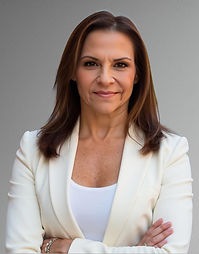
Meredith Martin Addy
President & Co-Founder · Registered Patent Attorney · Electrical Engineer
An electrical engineer and registered patent attorney, Mimi draws on more than 100 district-court patent cases and more than 100 Federal Circuit appeals to advise on prosecution strategy, PTAB proceedings, licensing, and portfolio durability.

Gregory B. Gulliver
Partner · Registered Patent Attorney · Former Software Engineer
A former software engineer with nine years of industry experience, Gregory has prepared and prosecuted hundreds of applications involving wireless communications, software, computer hardware, semiconductors, and network technologies.

Brandon R. Theiss
Partner · Registered Patent Attorney · Licensed Professional Engineer
A licensed professional engineer and former industrial-control and medical-device engineer, Brandon advises on patent prosecution, § 101 strategy, portfolio development, and post-grant proceedings involving AI, software, cloud systems, medical devices, and automation.

Craig McLaughlin
Senior Counsel · Registered Patent Attorney · Biology Background
A registered patent attorney with a biology background and nearly 30 years of experience, Craig handles utility and design-patent matters involving medical devices, mechanical systems, consumer products, computer hardware, and related post-grant and appellate issues.

Ganesh J. Prabu
Technical Advisor · Wireless Engineer · Patent Analysis and Licensing Support
Ganesh J. Prabu is a wireless engineer and technical advisor with more than two decades of experience, including roles at Motorola and BlackBerry. He supports patent prosecution, licensing, and litigation through technical analysis of 5G, LTE, and IoT technologies, claim-chart development, reverse engineering, and evidence-of-use analysis.


Discuss Your Reexamination Matter
Start with a general, nonconfidential description of the matter, its procedural stage, and any response deadline. Tell us whether you are defending issued claims or considering a third-party request, and whether existing counsel will coordinate the matter. We can then identify the information needed for conflicts review.
Please do not include confidential information in an initial inquiry. An attorney-client relationship is formed only through a written engagement agreement.